
Books for Holy Week


I have two book recommendations for Holy Week. Both are by Timothy Keller, who I call the C. S. Lewis of our times. Keller is an incredible theologian, he delves deep into the truths we believe as Christians and dares to bring up passages often ignored in the mainstream churches. 


The first book I recommend is Timothy Keller’s “Jesus the King: Understanding The Life and Death of The Son of God.” In this book Keller gets into fundamentals of our faith and explains The Holy Trinity in the best and easiest way to understand I have ever read! For that alone its worth a read.  


Pastor Keller’s books are full of scripture, he never makes a point without substantiating it with Scripture, which makes him a man after my own heart. 


The second book I recommend is his book “Hope in Times of Fear: The Resurrection and The Meaning of Easter.” 
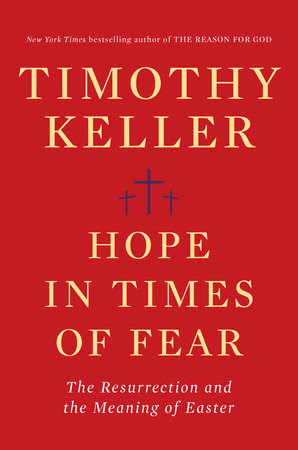


Pastor Keller goes deep into the Resurrection and what it means for us as Christians, even pointing out that it gets less coverage than Good Friday in sermons and that the Resurrection has implications for us in the spiritual that should change how we experience life as the saints of God. 


I highly recommend both these books by the seminal theologian of our time. He is a man “awaited with grief” as he has and is battling cancer. Through his tribulations he has penned these two great books that help us really examine the core truths of Christianity and how they should be transforming us and equipping us to be more “than conquerors through Christ.” They two books are timely because they go into our Lord Jesus life, death, and Resurrection in great detail, giving us not just a great wealth of knowledge, a relevant teaching on Holy Week, but also how to apply these doctrines and revelations into our daily lives. Amen. 


Comments

Popular posts from this blog

The Potrait of Jesus: What Christ Looked Like

What was Jesus’s appearance? Pseudo-historians at National Geographic and other publications argue that Jesus’ humanity was of Arab or African descent. This is impossible because Jesus our God was Son of David according to His flesh, “He promised beforehand through His prophets in the Holy Scriptures, regarding His Son, who was a descendant of David according to the flesh, and who through the Spirit of holiness was declared with power to be the Son of God by His resurrection from the dead: Jesus Christ our Lord (God),” (Romans 1:2-4), and King David was described as the following, “So he sent and brought him in. Now he was ruddy [red, ruddy, from the word admowniy {ad-mo-nee'}; from 'adam ; reddish of the hair or the complexion red, ruddy], with beautiful eyes and a handsome appearance. And the LORD said, "Arise, anoint him; for this is he. So Samuel took the horn of oil and anointed him in the presence of his brothers, and from that day on the Spirit of the LORD came ...

Dispensationalism

John Nelson Darby (1800-1882) was a man who did two things, he took 70th week of the Book of Daniel and stretched out to the End Times, and he was the father of  Dispensationalism , a belief system that God dispenses different peoples with separate blessings and covenants. According to Darb'ys doctrine of Dispensationalism, God dispenses different covenants. There are total of seven dispensations that divide the history of man: I. Dispensation of Innocence (prior to the Fall, "Do not east of the Fruit of Good and Eve, Eden), II. Dispensation of Conscience ( You must assuage guilt and sin with blood sacrifices.) III. Dispensation of Human Government (Multiply and Subdue the world, example the Tower of Babel Gen 11:1-9, and Genesis 1:28). IV. Dispensation of the Promise (Dwell in Canaan, Jerusalem) V. Dispensation of the Law ("Obey the Law of Moses and the Prophets"). VI. Dispensation of Grace (The Church, Jesus Christ has come...

Orthodox Christianity and Messianic Judaism

There is a divide between the two sides of Christianity. One is lined by a rosary, the other with tallit (prayer shawl). In the west we tend to come from a Greco-Roman understanding of The Bible and Jesus Christ. We are saturated with images of the Crucifixion and see through the red lens of Calvary. Now The Messianic or Jewish perspective is becoming more prevalent as people begin to study the roots of the Christian faith. After all, Jesus was a Jew and his Twelve Disciples were all Jews of different sects and positions in society. By studying the Jewish roots of Jesus we come to understand the ancient customs, practices, rites, and traditions that are featured in the Old and New Testaments. We learn in Jewish tradition that a Rabbi had to be ordained by two rabbis and that when Jesus was asked, "by who's authority do you say these things?, (Luke 20:2)" the Pharisees were asking who had ordained Jesus and where he got his yoke (teachings), and Jesus responds, "wh...